My building might have asbestos! Help!
Don’t panic! We know someone who can help! Here’s what you need to do. If the building was constructed entirely after 2000, asbestos is unlikely to be an issue.. The use of asbestos was outlawed by then. The use, supply and import of all forms of asbestos was banned by the snappily named Asbestos (Prohibitions) (Amendment) Regulations 1999, which came into force on 24 November 1999.
First, get a survey.
The first thing to do is to understand the scale of the problem. The way to do that is an asbestos survey. Global Environmental are experts in this. They work throughout the South East, especially in Essex and Hertfordshire. They also work quickly. You will receive a summary of the results within 48 hours of the survey taking place, and the full results within a week. That helps, doesn’t it!
There are two levels of survey: Management and Full. Management surveys are low impact, and are suitable for use in developing an Asbestos Management Plan. Full surveys involve more disruption and may need making good afterwards. They are required before the building is modified.
What happens during the survey?
A qualified surveyor will carry out a systematic inspection of the building, looking for materials that may contain asbestos. Where necessary, small samples are taken for laboratory analysis. The survey is planned to minimise disruption while ensuring all relevant areas are inspected.
Following the inspection, you receive a detailed report showing:
- The location of any asbestos-containing materials
- Their condition
- The level of risk they present
- Photographs and plans where appropriate
- Recommendations for ongoing management or removal
The report becomes the foundation of your asbestos management strategy and helps you meet your legal responsibilities.
Asbestos in Essex and Hertfordshire
Essex and Hertfordshire have a particular need for high-quality asbestos surveys. Both expanded significantly during the post-war years, when the use of asbestos was at its peak. Both counties were extensively developed to provide new housing and employment for people moving out of London. This led to the construction of new factories, offices, schools, hospitals and entire new towns, many of which incorporated asbestos-containing materials. As a result, many buildings from this period still require careful assessment before maintenance, refurbishment or demolition work is carried out.
Understanding the risks
Understanding the risks is the essential first step.
A management survey identifies whether asbestos is present and assesses how hazardous it is. This assessment helps prevent unnecessary action. If asbestos is discovered, immediate removal is not always required; it may simply need to be recorded in the asbestos register and left undisturbed.
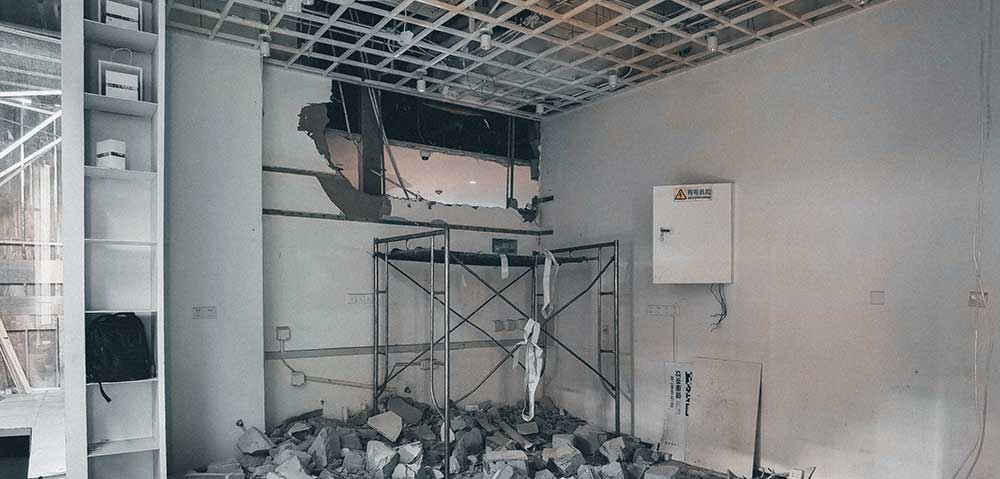
A full survey before a refurbishment can prevent delays and extra costs. Finding asbestos mid-project usually adds weeks and increases expenditure. Once asbestos-containing material is identified, the following steps apply, all of which delay the project:
- a full asbestos survey takes place
- the survey results inform the writing of a schedule of works to remove the asbestos
- a specialist contractor is chosen and a timescale agreed
- all other work on the site stops while the removal is completed
- a second survey, including atmospheric tests, confirms the removal is complete
- normal work resumes
How urgent is it?
That depends on your plans for the building. Asbestos is safe if left undisturbed, and while you must manage it, you generally have time to do so.
If you intend to refurbish or demolish the building, the issue becomes urgent. Any alteration increases the risk of releasing asbestos fibres.
As with any survey, there is a cost, but it is a sound investment. Identifying asbestos at the outset allows it to be built into the project plan, while discovering it mid-project almost always leads to delays and extra expense.
Who is responsible?
The Control of Asbestos Regulations 2012 describes the person responsible as the “dutyholder”. The dutyholder is “the person with responsibility for protecting those who use the building, which is usually the person or organisation with responsibility for maintenance.”
What are the dutyholder’s responsibilities?
The Control of Asbestos Regulations 2012 requires the dutyholder to make and work through a plan to manage all asbestos-containing material in the building. The plan will usually include these elements:
- Policy statement: the overall strategy for managing the risk
- Management plan: the detailed procedures
- Asbestos register: listing all the parts of the building where ACMs are a risk
- Responsibilities and duties: which organisations and people are responsible for implementing which parts of the management plan
- Training arrangements: to make sure the current and future people responsible for implementing the plan can do so correctly
- Update schedule to make sure the register is always up to date
Who can help?
If the implementation plan sounds like it requires skills and experience that your organisation does not have, or simply resources that your organisation does not have, then we know someone who can help. Global Environmental have years of experience of solving asbestos problems. They are excellent consultants and project managers.
Why is it important to control asbestos?
Historic exposure to asbestos is one of the biggest work-related causes of death in the UK today. There were 2,218 asbestos related deaths in the UK in 2023. In the UK exposure to asbestos causes:
- more than 9 out of 10 cases of mesothelioma in men
- more than 8 out of 10 cases of mesothelioma in women
Another, rarer disease caused by asbestos is asbestosis. Statistics from the UK’s Health and Safety Executive state that in 2019, there were 490 asbestosis deaths. As with mesothelioma, there is no effective cure.
Will my insurance company help me remove asbestos?
Probably not. Most home and commercial insurance policies do not cover the costs of removing asbestos. If you need to remove asbestos the costs are probably going to fall on you.
If the part of the house that may contain asbestos has been damaged in a way that is covered by your insurance, then it’s a different story. For example, if the ceiling falls down due to a leaking water pipe, and it is decorated with Artex that may contain asbestos, the insurance company should pay the costs of the repair. This includes the extra costs that arise from safely removing and disposing of the asbestos.
Buyer beware
If you are thinking of buying a property that may contain asbestos, make sure your surveyor will consider this as part of their inspection and report. However, a standard building survey is not the same as a specialist asbestos survey. A general surveyor may identify materials that could potentially contain asbestos, but they may not be qualified to determine exactly what those materials are, assess their condition or arrange appropriate sampling and laboratory analysis.
For extra peace of mind, it can be worthwhile commissioning your own asbestos survey from specialists in the field, such as Global Environmental. A specialist asbestos surveyor can carry out a more detailed inspection, identify suspected asbestos-containing materials more reliably, and have samples analysed.
Knowing about asbestos before you complete a purchase can help you understand the true condition of the property and avoid unexpected costs later. Asbestos-containing materials that are in good condition and unlikely to be disturbed may not require immediate removal, but damaged materials or asbestos in areas affected by planned refurbishment could require specialist management or removal. These costs may be significant and are better understood before you commit to buying. Your buildings insurance is unlikely to cover the costs.
An asbestos survey can be particularly valuable when purchasing an older property that you intend to renovate, extend or substantially alter. Finding asbestos after building work has started can cause delays, additional expense and disruption. Identifying it beforehand allows you to factor any necessary precautions or removal work into your plans and budget. It may also help you decide whether to proceed with the purchase, or to renegotiate the price.
Asbestos survey FAQs
We have a page with a set of common questions and answers on Asbestos Surveys. We hope you find it helpful.